How to Choose a Digital Marketing Agency: 7 Checks
What You Will Learn
If you are working out how to choose a digital marketing agency, judge them on three things before anything else: named case studies with dates and revenue, how they measure leads and sales rather than clicks, and how long their clients stay. A polished pitch deck tells you how well an agency sells itself. Retention and published results tell you how well it sells for its clients.
Gateway Marketing Digital has been a digital marketing agency in Dubai since 1997. We have worked with over 200 clients over the years, with 95% client retention and 99% on-time delivery. Here is the checklist we would use to choose an agency, written from the inside.
How to choose a digital marketing agency: start with your goal
Write down the one result you are buying before you take a single call: more qualified leads, more online sales, more booked appointments, or more visibility on Google and in AI answers. Then match agencies to that result. An agency that excels at brand content may be the wrong fit if you need leads next month, and a pure ads shop may not fix a website that loses visitors.
1. Can they show named results in your kind of business?
Ask for case studies that name the client, the period and the result in revenue, sales or qualified leads. We publish ours on our case studies page, for example:
E-commerce: Custom Factory, a Dubai gifting brand, held return on ad spend above 3x every month for ten straight months across Meta and Google, with 2,833 online orders.
Premium skincare: Divinom Healing reached a 6.5x return on ad spend in its first three months, at an average order of AED 3,281.
Real estate: the Dubai Jewel Tower launch for Rocky Real Estate generated 1,122 leads in about three months.
B2B SEO: Teko Marine has 351 of 393 tracked keywords on Google’s first page, 176 of them at number one.
Whoever you speak to, expect that level of detail, and ask how each number was measured.
2. How do they measure success?
Ask what the first line of their monthly report says. It should be cost per qualified lead, cost per sale or revenue, not reach and likes. Then ask how they know which ad or search produced each sale. A strong agency logs every lead, including WhatsApp chats, against its campaign and sends real outcomes back to Meta and Google so the platforms learn who your buyers are.
3. How long do their clients stay?
Retention is the most honest number an agency has. Clients who see results stay; clients who do not, leave. Ask for the agency’s retention rate and for two current clients you can speak to. Ours is 95%, and several of our published case studies cover relationships that have run for years, such as Teko Marine since 2022.
4. Who will actually do the work?
Many agencies send senior people to the pitch and juniors to the account. Ask who will build the campaigns, who writes the copy, who designs the creative and who you will speak to each week. Ask how quickly they reply to messages and what happens when your account manager is on leave.
5. Will you own your accounts and data?
Your ad accounts, pixel, Google Analytics, Search Console, website and lead data should be in your business’s name, with the agency given access. If they run everything from their own accounts, you lose the history and the learning on the day you leave.
6. Do they connect the channels or sell them separately?
Ads, landing pages, SEO, email and WhatsApp follow-up work best when one team sees them together. Paid search shows which terms bring buyers, so SEO can target them. Email keeps leads warm that the ads paid for. Ask how the agency would connect your channels, and be wary of a proposal that is just a list of separately priced services.
7. Do they know the UAE market?
Dubai buyers message on WhatsApp more than they fill in forms, seasons such as Ramadan and summer change costs and behaviour, some audiences need Arabic, and regulated sectors such as property carry advertising rules. An agency that has worked across the UAE will plan for these from the start. Google lists similar questions to ask any search provider, including experience in your country and city, in its guide on whether you need an SEO.
What are the red flags when choosing a digital marketing agency?
Guaranteed rankings, leads or follower numbers before they have seen your business.
Case studies with no client names, no dates or only vanity metrics.
Long lock-in contracts with no performance review points.
No questions about your margins, sales process or who follows up leads.
Should I choose a specialist or a full service agency?
Choose on the result you need and how it is measured. A specialist suits one clear channel problem. A full service agency suits businesses that need ads, website, SEO and follow-up working together under one owner.
How long before I see results from a new agency?
Paid ads can bring leads in the first weeks, with costs settling over the first month or two. SEO usually takes three to six months for early results and longer for competitive terms.
What should I prepare before speaking to agencies?
Know your goal, the value of a customer, your current lead and sales numbers, your monthly budget range and who handles leads. Agencies give better proposals when they can see your real numbers.
Is the cheapest agency a false economy?
Often. A low fee with poor tracking can waste far more in ad spend than it saves. Compare agencies on expected cost per sale and proof, not on the monthly fee alone.
Next step
Knowing how to choose a digital marketing agency comes down to proof, measurement, retention and ownership. If you would like to see how we would approach your business, contact our team or visit our office in Gulf Towers, Oud Metha.
Many businesses generate website traffic and enquiries but still struggle to convert them into paying customers. In fact, the average conversion rate across e-commerce websites is below 2%, showing that attracting visitors alone does not guarantee sales.
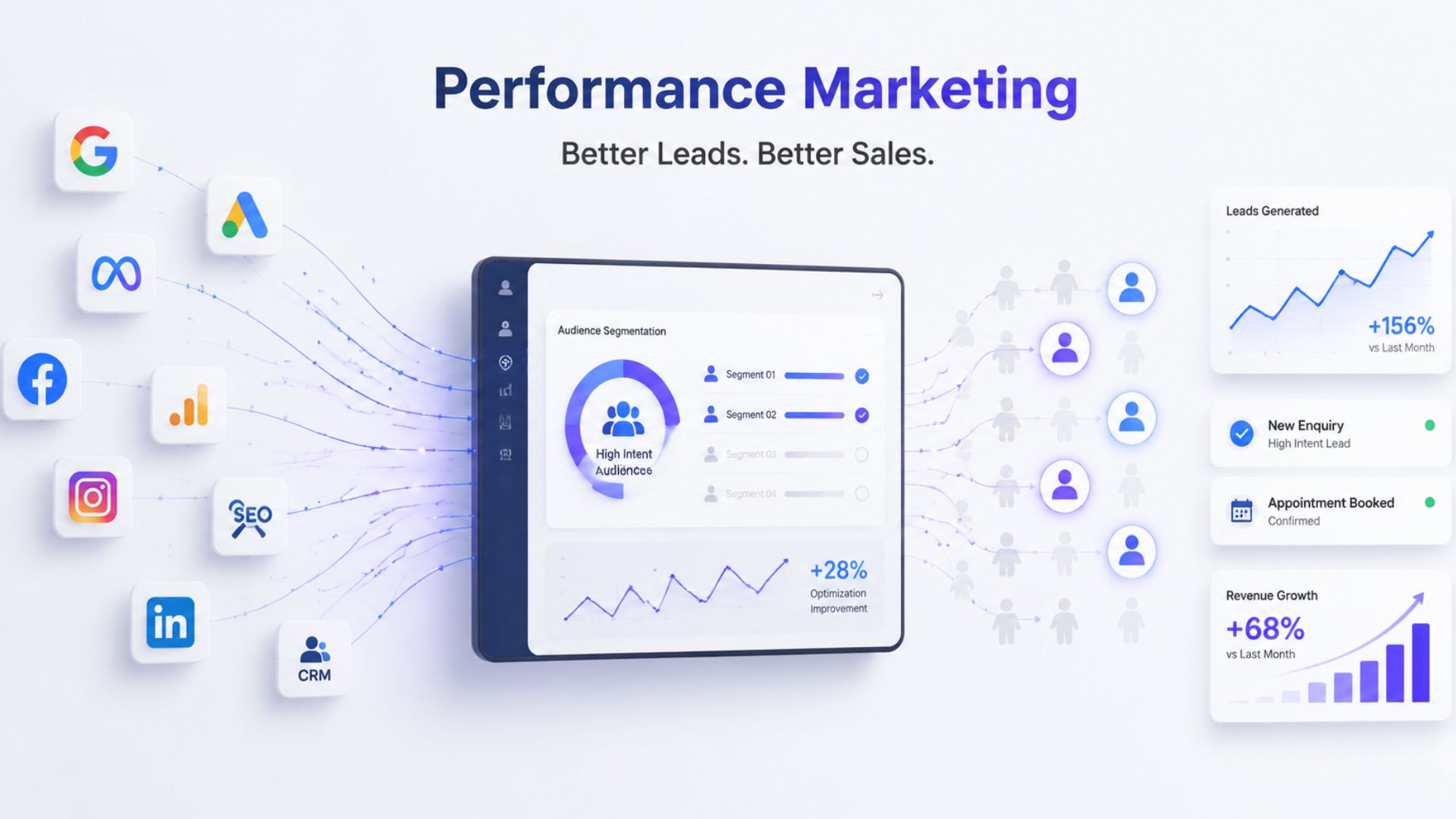
The real challenge is reaching people with genuine buying intent and guiding them towards the right action. Performance Marketing Services address this by connecting every campaign to measurable outcomes such as qualified leads, bookings, purchases and revenue.
Through precise targeting, relevant advertising, conversion-focused landing pages and continuous optimisation, performance marketing helps businesses reduce wasted spending, improve customer acquisition and turn more marketing activity into meaningful growth.
Why High-Quality Leads Matter More Than High Traffic
Traffic shows how many people visit a website, but it does not indicate how many are likely to buy. A qualified lead is someone who matches the target customer profile, has a relevant need and is more likely to become a customer.
High traffic can still produce poor results when visitors are outside the service area, lack the required budget or have little buying intent. Similarly, a low cost per lead is not valuable when those leads rarely convert.
Businesses should therefore track:
Qualified lead rate
Lead-to-customer conversion rate
Customer acquisition cost
Revenue generated per campaign
Customer lifetime value
The objective is not to generate the highest number of enquiries, but to attract the right prospects and convert more of them into paying customers.
How Performance Marketing Generates High-Quality Leads
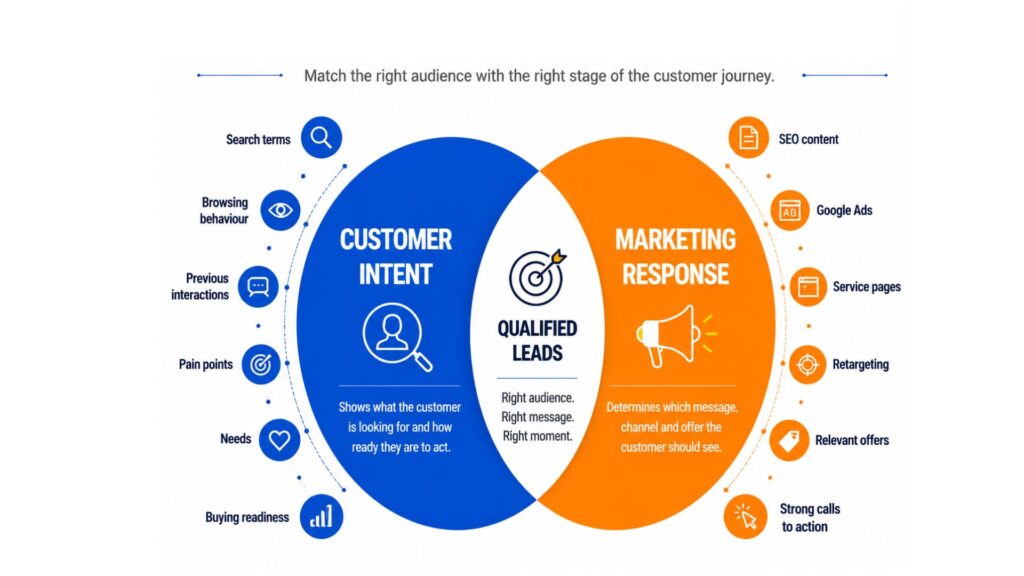
High-quality leads do not come from showing more ads to more people. They come from reaching the right audience with the right message, then making it easy for them to take the next step.
Performance marketing brings targeting, messaging, landing pages and tracking together so every campaign can be judged by what it actually delivers: qualified enquiries, bookings, purchases and sales.
1. Targeting People Based on Their Buying Intent
Not every search carries the same level of interest.
Someone searching for “home interior design ideas” may be exploring options. Someone searching for “office fit-out company in Dubai” is far closer to requesting a quotation.
Performance marketing uses search terms, browsing behaviour and previous interactions to identify this difference. Google Ads can reach people actively looking for a solution, while SEO can support users who are still comparing options.
A strong performance marketing strategy creates content for both stages. Informational pages build trust, while service pages and search campaigns capture users with stronger buying intent.
2. Reaching the Right Audience
Better targeting means fewer wasted clicks and more relevant enquiries.
Depending on the platform, campaigns can be refined by:
Location
Demographics
Interests
Search behaviour
Website activity
Customer lists
First-party CRM data
For example, a local clinic can focus on people within a practical service radius. A real estate company can promote specific properties to users interested in selected locations. A B2B company can target particular industries, company types or decision-makers. As campaign data builds, low-performing audiences can be excluded and stronger segments can receive more budget.
3. Matching Ads With Real Customer Needs
People are more likely to respond when an ad clearly reflects what they are looking for.
A user searching for a specific treatment, training course or business service should see a message related to that exact need. Generic advertising may attract attention, but it often produces weaker enquiries.
The call to action should also match the customer’s level of readiness. It may encourage them to:
Request a quotation
Book an appointment
Schedule a consultation
Register for a demo
Download a guide
View available properties
Clear messaging helps users understand the offer before they enquire, improving both relevance and lead quality.
4. Turning Clicks Into Enquiries With Better Landing Pages
A good ad can still fail if it sends users to a confusing homepage.
Dedicated landing pages keep the journey focused. They should explain the offer clearly, match the advertisement and guide visitors towards one main action.
Key elements include:
A clear value proposition
Relevant information
Strong trust signals
Simple contact options
A short, useful form
A visible call to action
Mobile-friendly design
Fast page performance
Lead forms can also improve qualification. A real estate form may ask about budget and preferred location, while a B2B form may ask about company size or project requirements.
Through conversion rate optimization, businesses can test headlines, forms, layouts and offers to see what generates better enquiries.
5. Tracking What Happens After the Click
Clicks and form submissions only show part of the story.
Businesses should track actions that indicate real value, such as:
Phone calls
WhatsApp enquiries
Appointment bookings
Demo requests
Purchases
Qualified leads
Closed sales
Conversion tracking shows which campaign produced an enquiry. CRM integration shows whether that enquiry became a customer.
This matters because a campaign with fewer leads may still be more profitable if those leads convert at a higher rate. Performance should therefore be judged by lead quality and revenue, not volume alone.
6. Improving Results Through Continuous Testing
Performance marketing is built around ongoing improvement.
Businesses can test:
Keywords
Audience segments
Ad creatives
Offers
Landing pages
Calls to action
Lead forms
Bidding strategies
Weak elements can be reduced or removed, while successful campaigns receive more investment.
This cycle helps improve customer acquisition, control wasted spend and keep campaigns aligned with changing customer behaviour, competition and advertising costs.
How Different Businesses Benefit from Performance Marketing
The principles of performance marketing remain consistent, but the channels, messaging and conversion goals should reflect each industry.
Real Estate
Real estate businesses often receive many enquiries, but not every enquiry comes from a serious buyer or tenant.
Performance marketing can improve lead quality through location-based search campaigns, property-specific landing pages, retargeting and CRM tracking.
For example, a company promoting apartments in Dubai Marina can target users searching for that specific property type and location. Instead of directing them to a general property website, it can send them to a page featuring relevant units, prices, amenities and viewing options.
Forms can ask about budget, preferred area, property type and expected buying timeline. This information helps agents prioritise more suitable enquiries and spend less time following up with poorly matched prospects.
Healthcare and Medical Businesses
Clinics, dental practices, diagnostic centres and other healthcare providers can use performance marketing to connect with people actively seeking a particular service.
A dental clinic might create Google Ads campaigns for specific treatments in nearby areas. A diagnostic centre may build individual landing pages for different tests. A medical practice may track calls, online forms and appointment bookings.
Local SEO can also improve visibility when people search for healthcare services near them.
The objective is not simply to increase website traffic. It is to make relevant information easy to find and provide a clear route to an appointment.
Healthcare advertising should remain accurate, responsible and compliant with applicable regulations and platform policies. Campaigns should not use exaggerated promises or guaranteed treatment outcomes.
E-commerce Businesses
For e-commerce brands, website traffic only matters when it contributes to purchases.
Performance marketing can use Google Shopping, paid social campaigns, product remarketing and abandoned-cart activity to bring users back to products they have already viewed.
Campaigns can be evaluated using:
Purchases
Revenue
Average order value
Cost per acquisition
Return on ad spend
Conversion optimisation can also improve product pages, checkout steps, delivery information, trust elements and mobile usability.
This helps the business identify which products, audiences and advertising channels generate profitable sales rather than simply attracting visitors.
Education and Training Providers
Education providers need enquiries from students who are interested in the right course, schedule, location and fee level.
Course-specific campaigns can send users to focused pages containing curriculum details, entry requirements, fees and registration options. Providers can track brochure downloads, counselling calls, webinar registrations, applications and completed enrolments.
CRM follow-ups can help nurture prospects who need additional information before making a decision.
By connecting campaigns with enrolment data, institutions can understand which channels generate genuine students rather than only initial enquiries.
Startups and B2B Businesses
Performance marketing for startups helps teams test demand before committing large budgets.
A startup can compare audience segments, messages and offers to determine what generates interest. It can measure demo requests, trial registrations, sales calls and customer acquisition cost.
B2B businesses may combine search campaigns, LinkedIn advertising, educational content, landing pages and CRM tracking. Forms can include qualifying questions related to company size, industry, project requirements or expected timeline.
Once the business identifies a reliable combination of audience, message and offer, it can scale based on evidence rather than assumptions.
Common Mistakes That Reduce Lead Quality
Even well-funded campaigns can generate poor results when common mistakes go unnoticed. Here are the most frequent issues that reduce lead quality:
1. Targeting Too Broad an Audience
Trying to reach everyone often attracts users who have little interest or buying intent. Narrowing your audience based on location, behaviour and demographics leads to more relevant enquiries.
2. Optimising for Clicks Instead of Conversions
A high click-through rate may look impressive, but it doesn’t guarantee sales. Focus on meaningful metrics such as qualified leads, bookings and revenue rather than clicks alone.
3. Sending Traffic to Generic Landing Pages
If your landing page doesn’t match the advertisement or search intent, visitors are less likely to convert. Dedicated landing pages create a more relevant and seamless customer journey.
4. Not Qualifying Leads
Forms that only ask for a name and email may generate more enquiries but provide little insight into whether the prospect is a good fit. Adding relevant qualification questions helps your sales team prioritise genuine opportunities.
5. Incomplete Conversion Tracking
Without tracking calls, form submissions, purchases and CRM data, it’s impossible to know which campaigns are generating real business outcomes.
6. Ignoring Sales Feedback
Marketing teams should regularly review lead quality with sales teams. This helps identify which campaigns attract genuine prospects and which generate low-value enquiries.
7. Scaling Campaigns Too Early
Increasing budgets before validating targeting, messaging and landing pages often amplifies inefficiencies. Optimise first, then scale campaigns that consistently generate qualified leads and sales.
When Should a Business Work with a Performance Marketing Agency?
A business may need specialist support when marketing activity is increasing but leads and sales remain inconsistent.
Common warning signs include rising advertising costs, poor-quality enquiries, incomplete tracking and reports that focus on clicks rather than revenue. Internal teams may also lack the time or expertise to manage paid advertising, analytics, landing pages and conversion optimisation together.
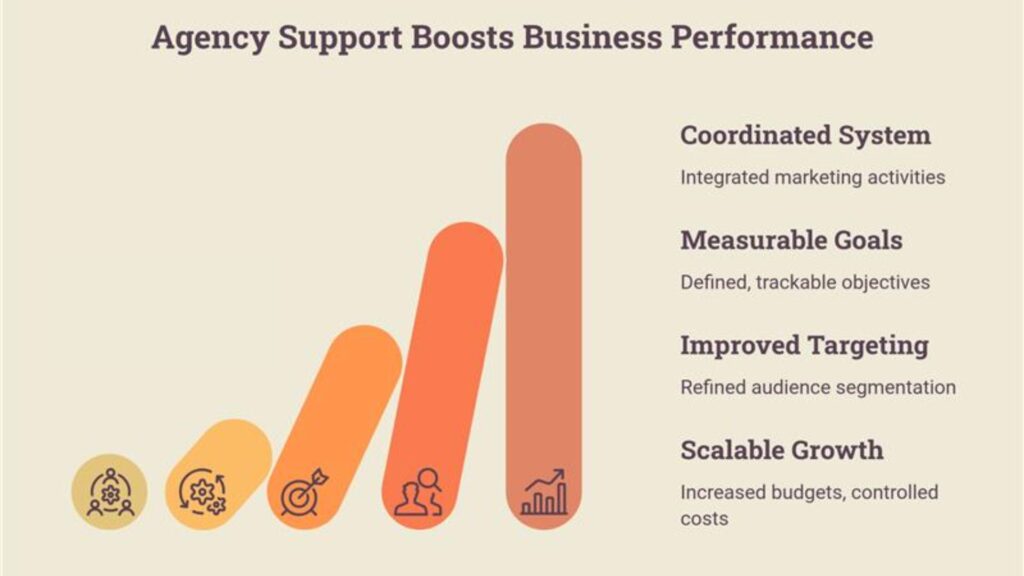
A Performance Marketing Agency can help create a coordinated system across these areas. This may involve defining measurable goals, setting up conversion tracking, refining targeting, improving landing pages and reviewing lead quality with the sales team.
Agency support can also be useful when a business is preparing to scale. Increasing budgets requires an understanding of which channels, audiences and offers can grow without causing acquisition costs to rise sharply.
The right agency should be transparent about performance and connect its recommendations to qualified leads, customer acquisition and sales, not simply impressions or reach.
Final Words
When customer intent, targeting, advertising, landing pages, tracking and sales feedback work together, businesses gain a clearer understanding of where their customers come from and which marketing activities create value.
This is particularly important for startups and growing businesses that need to control acquisition costs and scale with confidence.
Need more qualified leads, not just more clicks? Contact Gateway Marketing Digital helps businesses and startups develop performance marketing strategies focused on better lead quality, measurable growth and increased sales.
Real estate lead generation in Dubai works when every project gets its own funnel, leads can start on WhatsApp, an agent calls within the hour, and budget follows viewings instead of cheap leads. Ads alone do not sell property. The system behind them decides how many leads become viewings, and viewings are where brokerage deals are won.
Gateway Marketing Digital has run property campaigns for Dubai brokerages and launches, including 1,717 buyer leads across about 25 projects for Rocky Real Estate and 1,122 leads in three months for the Dubai Jewel Tower launch. This is the playbook those campaigns taught us.
Why does real estate lead generation in Dubai fail so often?
Most failed campaigns share the same pattern: one generic ad for the whole agency, a lead form that asks for a name and a number, leads dropped into a group chat, and an agent who calls the next afternoon. The cost per lead looks fine. The viewings never come. Buyers in Dubai enquire with several agencies at once, so the first useful call usually wins.
1. Does every project have its own funnel?
A buyer looking at a two-bedroom in Business Bay is not the same buyer as an investor in an off-plan launch. Each active project should have its own landing page, its own Meta campaign and, where people search by building or area, its own Google Search campaign. Creative should sell what makes that address different, not the agency.
For Rocky Real Estate we built every project this way. The Bay in Business Bay became the strongest campaign, with 129 viewings at a 33% lead-to-viewing rate: one in three leads booked to view.
2. Are WhatsApp leads part of the plan?
In Dubai, many property buyers would rather message than fill in a form. On the Dubai Jewel Tower launch, 44% of WhatsApp leads qualified, four times the 11% rate of Meta lead form leads. A form is easy to fill in on impulse. Starting a conversation filters for people who actually want to talk about a unit.
The catch is tracking. Every chat needs to be logged against the ad that started it, or WhatsApp leads vanish from your reports and budget decisions get made on half the data.
3. Ready stock or off-plan: where should the budget go?
Run both, but expect them to behave differently. Ready buyers can see the unit this week, so they convert into viewings faster. Across our ready-stock campaigns for Rocky Real Estate, leads produced 219 viewings at a 17% lead-to-viewing rate. Off-plan buyers need a longer nurture around payment plans, handover dates and the developer, so plan email and WhatsApp follow-up for weeks, not days.
4. Do you have a broker channel?
A large share of new-launch sales in Dubai go through agents. For a launch, treat brokers as a second channel with its own ads, its own WhatsApp messages and its own briefings or open house registrations. On Dubai Jewel Tower, brokers made up nearly a quarter of all logged leads, each one able to bring several buyers.
5. How fast and how well do agents follow up?
Route every lead to a named agent with an instant alert, and track contact, viewing and outcome in one pipeline. Give the agent context. For buyers who had not chosen a project, we built a property match quiz for Rocky Real Estate that asked budget, area and property type before contact details, so agents called with two or three matching listings instead of a cold script.
Online viewing booking helps too. When buyers can pick a slot themselves, you stop losing them between the enquiry and the call back.
6. Is budget judged on viewings, not leads?
This is the change that moves results most. When the Rocky Real Estate account moved from optimising for leads to optimising for viewings, budget went to the projects with the best viewing rates and the overall numbers improved. On Dubai Jewel Tower, judging campaigns on qualified rate cut cost per lead by 41% in a month, from AED 176 to AED 103, and the second phase ran at about AED 53 per lead, around 81% below the approved target.
Report weekly on leads, qualified leads, viewings booked and viewings done per project. If your agency only reports cost per lead, you cannot see which projects deserve more money.
What compliance basics apply to property ads in Dubai?
Property advertising in Dubai is regulated. Brokers and listings work through the Dubai Land Department and its Trakheesi permit system, so check that every ad and landing page carries the permits your brokerage needs before launch. Keep claims about returns and payment plans accurate and matched to the developer’s published terms.
Real estate lead generation in Dubai: a launch checklist
One landing page per project with brochure download and WhatsApp button.
Separate Meta campaigns for buyers and brokers.
Google Search for building and area names people already type.
Every lead, including WhatsApp chats, logged with its campaign and ad.
Instant routing to an agent and a target call time of under an hour.
Viewing outcomes sent back to Meta and Google so the platforms learn.
An email and WhatsApp nurture for off-plan buyers who are not ready yet.
In our published campaigns, Dubai property leads ranged from about AED 53 on a residential launch to AED 148.90 across prime launches. The better measure is cost per viewing: a cheap lead that never views costs more than an expensive one that does.
Do Facebook and Instagram ads work for real estate in Dubai?
Yes, when each project has its own funnel and leads reach an agent fast. Our Meta and Google campaigns for Rocky Real Estate produced 1,717 buyer leads across about 25 projects and 219 viewings on ready stock.
Are WhatsApp leads better than lead form leads for property?
On the Dubai Jewel Tower launch they were: 44% of WhatsApp leads qualified against 11% of lead form leads. Forms bring volume; WhatsApp brings buyers who want to talk.
How quickly should agents call a new property lead?
Within the first hour. Dubai buyers often enquire with several brokerages at once, and the first agent who calls with relevant listings usually books the viewing.
Next step
Real estate lead generation in Dubai is a viewing business, not a lead business. If you want a second opinion on your current campaigns or a launch plan for a new project, contact our team.
If you are working out how to choose an AI SEO agency, ask them to show you, question by question, whether ChatGPT, Perplexity, Gemini and Google AI Overviews mention your business today, and who they cite instead. An agency that cannot measure AI answers cannot improve them. The good ones start with that baseline, then fix access, content and third-party citations, and report the change every month.
Gateway Marketing Digital runs AI SEO, generative engine optimisation (GEO) and answer engine optimisation (AEO) for UAE businesses, alongside classic SEO. Here are the seven checks we would use to choose an AI SEO agency, and the claims that should make you walk away.
What does an AI SEO agency actually do?
AI SEO is the work of getting your business named and cited when people ask AI tools for a recommendation, such as “which agency in Dubai is best for Meta ads” or “best translation company for Japanese documents”. AI assistants build those answers from pages they can read and sources they trust: your own site, directories, review sites, list articles and forums. So the job covers your website and your presence across the web.
It is not a separate trick. Google says plainly in its guide to AI features and your website that there are no extra requirements or special optimisations to appear in AI Overviews or AI Mode: the same SEO fundamentals apply. Any agency that sells AI SEO as something unrelated to good SEO is selling you a story.
1. Do they measure your AI visibility before they start?
Ask for a baseline: a list of the questions your buyers ask, run through ChatGPT, Perplexity, Gemini and Google AI Overviews, showing whether you are mentioned, whether your site is cited, and which sources are cited instead. We run this monthly on our own site and for clients, with buyer questions first (“best”, “which agency”, “near me”, “price in Dubai”) and informational questions second. Without a baseline there is nothing to report against.
2. Will they check that AI crawlers can read your site?
Many sites block AI crawlers without knowing it, often through a firewall or a Cloudflare bot setting. If GPTBot or PerplexityBot gets a 403 error, those tools cannot read or cite your pages, whatever your content says. A serious agency checks crawler access in your security settings in week one. Ask how they verify it; testing with a faked bot name from a laptop gives false results.
3. Do they write content that answers buyer questions directly?
AI answers lift short, specific, well-structured passages. Pages should give the direct answer in the first two or three sentences, use question-style headings, include an FAQ with FAQ schema, and carry real numbers with named sources. Ask to see a page the agency wrote and point to the sentence an AI tool would quote.
4. How will they win citations outside your website?
For buyer questions, AI tools lean heavily on third-party sources. When we checked the question “what are the best digital marketing agencies in Dubai”, the answers cited agency directories such as Sortlist, Semrush Agency Partners, Clutch and DesignRush, plus “top agencies in Dubai” list articles. An AI SEO agency should name the exact sources cited for your questions and have a plan to get you onto them: complete profiles, genuine reviews and inclusion requests.
5. Will they keep your business facts identical everywhere?
AI tools match your business across sources by its name, address, phone, founding year and services. If your website says one thing, your Google Business Profile another and a directory a third, the tools are less sure the mentions are the same business. Ask how the agency audits and fixes these facts, and whether they add Organization or LocalBusiness schema with your official profiles listed.
6. Can they show real results, with names?
Ask for case studies with the client named. For Teko Marine, our SEO and AEO work put 351 of 393 tracked keywords on Google’s first page and 176 at number one, with growing visibility in Google’s AI Overviews. For LKX Translation, we added structured data so search engines and AI tools understand exactly who the company is, and its Google impressions grew 3.7x in 11 weeks. On our own site, our generative engine optimisation page moved into Google’s top five for “generative engine optimization services in Dubai” within a month.
7. What will they report every month?
The report should show, for each tracked question, whether you are cited, mentioned or absent, compared with last month, and which sources to win next. It should also show the classic numbers (rankings, clicks, enquiries), because AI visibility and Google rankings move together. Our post on SEO KPIs beyond rankings and clicks covers which numbers prove revenue impact.
What are the red flags when choosing an AI SEO agency?
A guarantee that ChatGPT will recommend you. Nobody controls AI answers.
A “secret” file or prompt that makes AI tools rank you. Google says no special files or markup are needed.
No baseline measurement of AI answers before work starts.
Mass-produced AI content with no real data, names or sources.
It builds on it. The foundations are the same: a crawlable site, helpful pages and authority. AI SEO adds measurement of AI answers, content written to be quoted, and work on the third-party sources AI tools cite.
How long does AI SEO take to show results?
Fixes such as unblocking AI crawlers can matter within weeks. Being cited for competitive buyer questions usually takes several months, because it depends on rankings, reviews and listings building up.
Do I need an llms.txt file to appear in AI answers?
Google says no special files are needed for its AI features. An llms.txt file is a cheap, harmless summary for other AI tools, but it is not what gets you cited; content and third-party sources are.
Can an agency guarantee a ChatGPT recommendation?
No. AI answers change by question, wording and user. An honest agency promises measurement and a clear plan, then reports what moved.
Next step
Knowing how to choose an AI SEO agency comes down to measurement, access, quotable content and real citations. If you want to know whether AI tools mention your business today, contact our team and we will show you where you stand.