Opens in a new tab

How to Choose a Lead Generation Company in Dubai

What You Will Learn

If you are deciding how to choose a lead generation company in Dubai, judge every option on one question: can they show you which leads became booked meetings and paid sales, not just how many forms were filled? A company that tracks leads through to revenue will grow your sales. One that only reports cost per lead will grow its own report.

Gateway Marketing Digital has been a Dubai marketing agency since 1997, and today we run lead generation on Meta, Google, SEO and WhatsApp for businesses across the UAE. Below are the seven checks we would use if we were hiring an agency ourselves, the red flags to walk away from, and the questions to ask on the first call.

How to choose a lead generation company: what matters most?

Four things decide whether a lead generation company makes you money: how they define a lead, how they track it after the form, who owns the data, and how fast each lead reaches your sales team. Channel lists, pricing models and creative styles all matter, but they come after these four. If an agency cannot answer them clearly on the first call, the rest of the proposal does not matter.

1. Do they agree what a qualified lead is before launch?

A lead is not a name and a phone number. For a property developer it may be a buyer with a budget above a set level and a timeline under six months (our guide to real estate lead generation in Dubai goes deeper on property). For a B2B service it may be a company of a certain size with a named decision maker. Ask the agency to write down, with you, what counts as a qualified lead and what does not.

That definition should then shape everything: the questions on the form, the wording of the ad and the audience. Ads that state the location, the offer and who it is for filter out the wrong people before they ever click.

2. Can they track every lead through to a sale?

This is the check most agencies fail. Ad platforms count a form submission as a conversion, so a campaign can look excellent in Ads Manager while your sales team says the leads are poor. The fix is closed loop tracking: the result of each lead is recorded and sent back to the ad platform, so it learns to find more people who actually buy.

Here is how we run it for our clients. Every lead lands in a lead sheet that belongs to that client only, with the campaign, ad and source attached. The client’s team marks each lead’s status (contacted, booked, showed, paid) and the sale value. We send those outcomes back to Meta through the Conversions API and to Google Ads through offline conversion imports, and our daily review of every client account reads those real outcomes, not just the platform’s own lead count. Internal test bookings are removed before anything reaches Meta, so they never teach the algorithm the wrong thing.

Ask any agency you speak to: “Show me a report where you can see which ads produced paying customers.” If they can only show clicks and cost per lead, the tracking stops at the form.

3. Who owns the leads, the ad accounts and the data?

Your ad accounts, your pixel and your lead data should sit in your own business accounts, with the agency given access. If the agency runs your ads from its own account, you lose the history, the audiences and the learning the day you leave. Ask directly: “If we stop working together, what do we keep?” The right answer is everything.

4. How do they track WhatsApp leads in the UAE?

In Dubai many buyers would rather send a WhatsApp message than fill in a form. Click to WhatsApp ads are a natural way to start that conversation, but many agencies cannot tell you which ad produced which chat, so those leads disappear from the report.

Ask how each WhatsApp enquiry is logged and matched to the ad that produced it. In our setup, every chat that starts from a click to WhatsApp ad is logged as its own row in the client’s lead sheet, so it is counted and followed up next to form leads instead of living only in someone’s phone.

5. How fast does a new lead reach your sales team?

A lead that waits overnight goes cold, especially when the same person has enquired with three competitors. Ask how leads are delivered (email alert, CRM, WhatsApp notification), who receives them, and what happens if a delivery fails. Our lead systems record every push to the lead sheet or alert email and retry it automatically when a service fails, so a lead is never lost silently. Ask for the same promise from anyone you hire.

6. Can they show real proof with dates and numbers?

Ask for a public case study with real numbers, the time period and the channels used. Vague claims such as “3x results” with no dates are a warning sign. For example, our Slim Polyclinic case study shows 576 leads and 108 completed treatments in the first 90 days, with the channels and dates listed on the page. That is the level of detail to expect.

Also ask whether the agency has worked with businesses that sell at your price point. Generating leads for a premium service is a different job from generating leads for a low cost product. Our guide to high ticket lead generation in the UAE explains why.

7. Which pricing model fits your business?

Lead generation companies in Dubai usually charge in one of three ways, and each one changes what the agency is rewarded for:

  • Monthly retainer, ad spend paid separately: the most transparent model. You pay the platform directly from your own ad account and pay the agency for management.
  • Pay per lead: simple to budget, but the agency is paid for volume, so quality often slips unless the lead definition is strict and written down.
  • Hybrid: a base fee plus a bonus tied to qualified leads or sales. This aligns both sides, but only works when outcomes are tracked as described in check 2.

Whichever model you choose, the price of each lead depends far more on your offer, your audience and how fast your team follows up than on the agency’s fee. Our guide to lead generation cost in Dubai breaks down what actually drives it.

What are the red flags when choosing a lead generation company in Dubai?

  • A guaranteed number of leads before they have seen your offer, your website or your sales process.
  • Ad accounts or lead data held in the agency’s name instead of yours.
  • Reports that show only impressions, clicks and cost per lead, with no link to booked meetings or sales.
  • No questions about who follows up leads or how fast.
  • Lead lists that are bought, shared or “exclusive” with no explanation of where the contacts came from.

What should you ask on the first call?

  • How will we define a qualified lead together?
  • How will the result of each lead get back to Meta and Google?
  • Whose name are the ad accounts, pixel and lead data in?
  • How are WhatsApp enquiries tracked and matched to ads?
  • What happens if a lead fails to reach our team?
  • Can we see a case study with dates, channels and numbers?

FAQ: how to choose a lead generation company

What does a lead generation company in Dubai actually do?

A lead generation company plans and runs the campaigns that bring enquiries to your business, usually through Meta (Facebook and Instagram) ads, Google Ads, SEO, landing pages and WhatsApp. A good one also sets up the tracking that shows which of those enquiries became booked meetings and paid sales, so budget moves towards the campaigns that sell.

Is pay per lead better than a monthly retainer?

Not by default. Pay per lead looks safer, but it rewards the agency for volume, so lead quality often drops. A monthly retainer with the ad spend paid from your own ad account is more transparent, because you see every dirham spent and every lead it produced. A hybrid model with a bonus tied to qualified leads or sales can work when both sides agree the definition in writing.

How long before a lead generation campaign shows results?

Paid campaigns on Meta and Google usually bring the first enquiries soon after launch. Judging lead quality takes longer: wait until enough leads have moved through your full sales cycle to see how many booked, showed up and bought. SEO is slower and builds over months, which is why most businesses run paid and organic together.

Should the agency or my own team follow up the leads?

In most cases your own sales team should speak to the lead, because they know the product and close the sale. The agency should make sure every lead reaches your team instantly, with the campaign it came from, and should read your follow-up outcomes to improve targeting. If nobody records what happened after the call, no agency can tell you which campaigns are working.

Next step

Knowing how to choose a lead generation company comes down to evidence: clear lead definitions, tracking to the sale, data you own and leads that reach your team fast. If you want to see how we set this up, read about our lead generation agency in Dubai services, or contact our team to talk through your current campaigns.


Frequently Asked Question

Read Next

Performance marketing

How Performance Marketing Services Generate High-Quality Leads and Sales for Businesses 

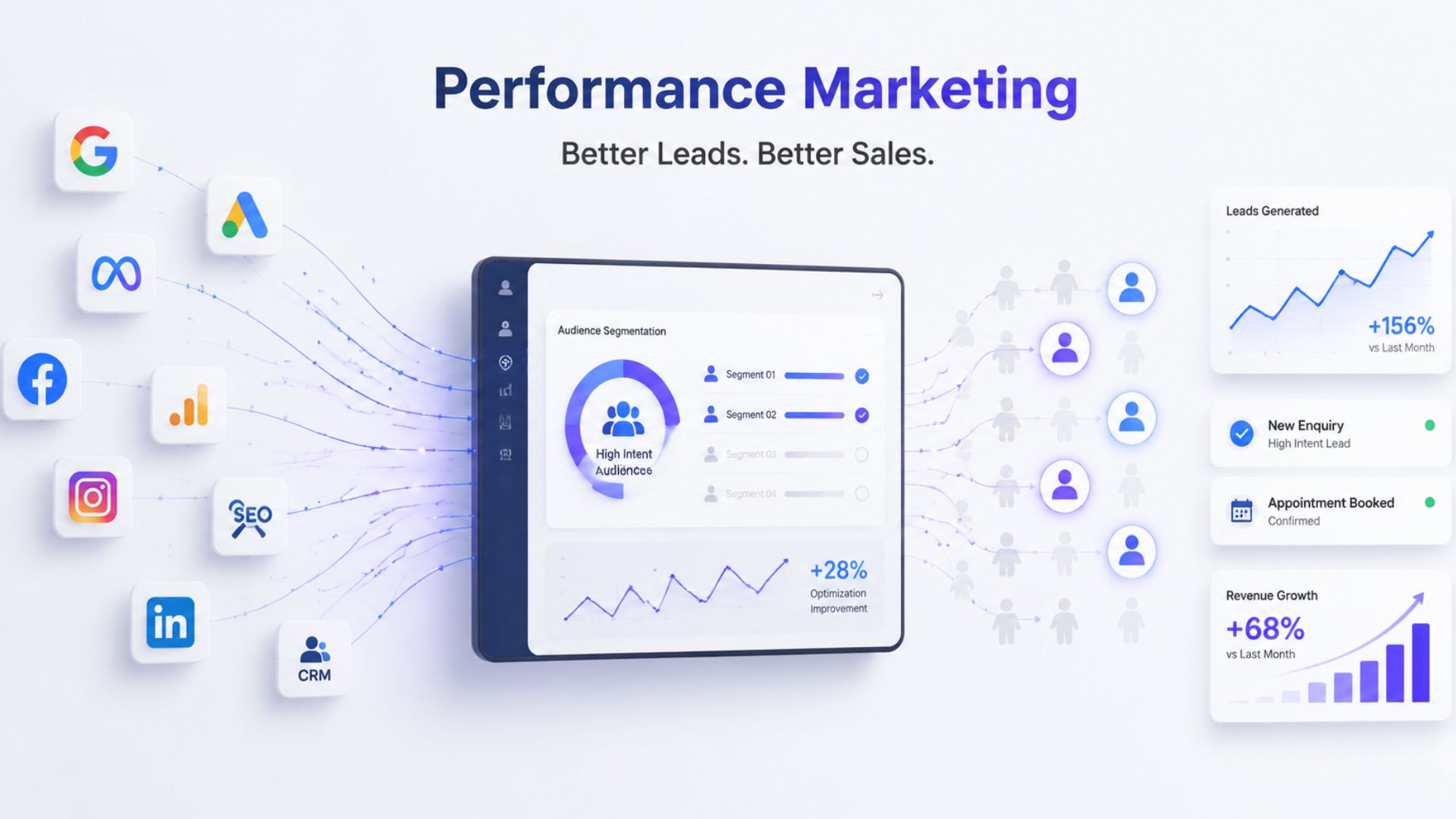
Many businesses generate website traffic and enquiries but still struggle to convert them into paying customers. In fact, the average conversion rate across e-commerce websites is below 2%, showing that attracting visitors alone does not guarantee sales. 

The real challenge is reaching people with genuine buying intent and guiding them towards the right action. Performance Marketing Services address this by connecting every campaign to measurable outcomes such as qualified leads, bookings, purchases and revenue. 

Through precise targeting, relevant advertising, conversion-focused landing pages and continuous optimisation, performance marketing helps businesses reduce wasted spending, improve customer acquisition and turn more marketing activity into meaningful growth. 

Why High-Quality Leads Matter More Than High Traffic 

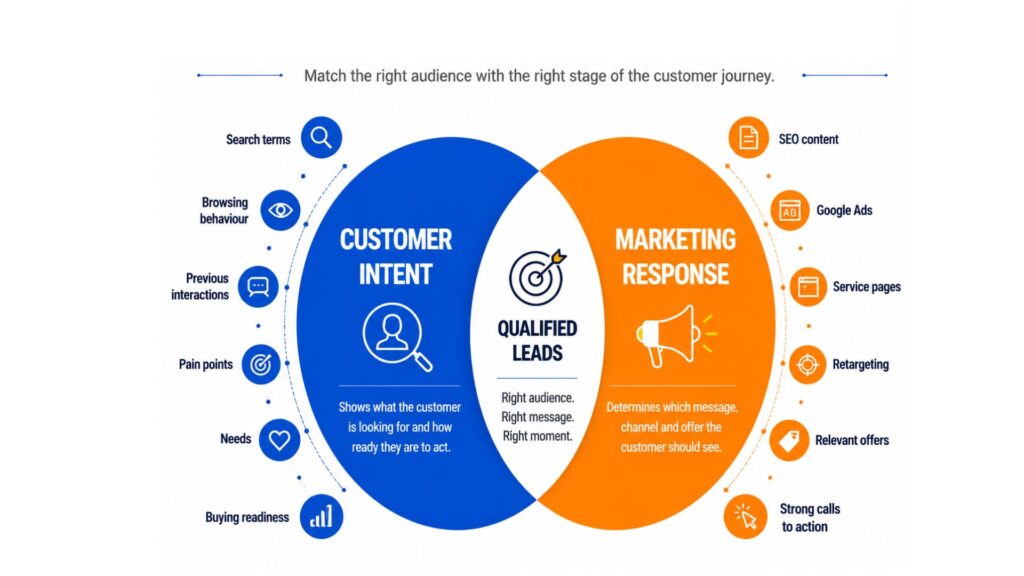
Traffic shows how many people visit a website, but it does not indicate how many are likely to buy. A qualified lead is someone who matches the target customer profile, has a relevant need and is more likely to become a customer. 

High traffic can still produce poor results when visitors are outside the service area, lack the required budget or have little buying intent. Similarly, a low cost per lead is not valuable when those leads rarely convert. 

Businesses should therefore track: 

  • Qualified lead rate  
  • Lead-to-customer conversion rate  
  • Customer acquisition cost  
  • Revenue generated per campaign  
  • Customer lifetime value  

The objective is not to generate the highest number of enquiries, but to attract the right prospects and convert more of them into paying customers. 

How Performance Marketing Generates High-Quality Leads 

High-quality leads do not come from showing more ads to more people. They come from reaching the right audience with the right message, then making it easy for them to take the next step. 

Performance marketing brings targeting, messaging, landing pages and tracking together so every campaign can be judged by what it actually delivers: qualified enquiries, bookings, purchases and sales. 

1. Targeting People Based on Their Buying Intent 

Not every search carries the same level of interest. 

Someone searching for “home interior design ideas” may be exploring options. Someone searching for “office fit-out company in Dubai” is far closer to requesting a quotation. 

Performance marketing uses search terms, browsing behaviour and previous interactions to identify this difference. Google Ads can reach people actively looking for a solution, while SEO can support users who are still comparing options. 

A strong performance marketing strategy creates content for both stages. Informational pages build trust, while service pages and search campaigns capture users with stronger buying intent. 

2. Reaching the Right Audience 

Better targeting means fewer wasted clicks and more relevant enquiries. 

Depending on the platform, campaigns can be refined by: 

  • Location  
  • Demographics  
  • Interests  
  • Search behaviour  
  • Website activity  
  • Customer lists  
  • First-party CRM data  

For example, a local clinic can focus on people within a practical service radius. A real estate company can promote specific properties to users interested in selected locations. A B2B company can target particular industries, company types or decision-makers. As campaign data builds, low-performing audiences can be excluded and stronger segments can receive more budget. 

3. Matching Ads With Real Customer Needs 

People are more likely to respond when an ad clearly reflects what they are looking for. 

A user searching for a specific treatment, training course or business service should see a message related to that exact need. Generic advertising may attract attention, but it often produces weaker enquiries. 

The call to action should also match the customer’s level of readiness. It may encourage them to: 

  • Request a quotation  
  • Book an appointment  
  • Schedule a consultation  
  • Register for a demo  
  • Download a guide  
  • View available properties  

Clear messaging helps users understand the offer before they enquire, improving both relevance and lead quality. 

4. Turning Clicks Into Enquiries With Better Landing Pages 

A good ad can still fail if it sends users to a confusing homepage. 

Dedicated landing pages keep the journey focused. They should explain the offer clearly, match the advertisement and guide visitors towards one main action. 

Key elements include: 

  • A clear value proposition  
  • Relevant information  
  • Strong trust signals  
  • Simple contact options  
  • A short, useful form  
  • A visible call to action  
  • Mobile-friendly design  
  • Fast page performance  

Lead forms can also improve qualification. A real estate form may ask about budget and preferred location, while a B2B form may ask about company size or project requirements. 

Through conversion rate optimization, businesses can test headlines, forms, layouts and offers to see what generates better enquiries. 

5. Tracking What Happens After the Click 

Clicks and form submissions only show part of the story. 

Businesses should track actions that indicate real value, such as: 

  • Phone calls  
  • WhatsApp enquiries  
  • Appointment bookings  
  • Demo requests  
  • Purchases  
  • Qualified leads  
  • Closed sales  

Conversion tracking shows which campaign produced an enquiry. CRM integration shows whether that enquiry became a customer. 

This matters because a campaign with fewer leads may still be more profitable if those leads convert at a higher rate. Performance should therefore be judged by lead quality and revenue, not volume alone. 

6. Improving Results Through Continuous Testing 

Performance marketing is built around ongoing improvement. 

Businesses can test: 

  • Keywords  
  • Audience segments  
  • Ad creatives  
  • Offers  
  • Landing pages  
  • Calls to action  
  • Lead forms  
  • Bidding strategies  

Weak elements can be reduced or removed, while successful campaigns receive more investment. 

This cycle helps improve customer acquisition, control wasted spend and keep campaigns aligned with changing customer behaviour, competition and advertising costs. 

How Different Businesses Benefit from Performance Marketing 

The principles of performance marketing remain consistent, but the channels, messaging and conversion goals should reflect each industry. 

Real Estate 

Real estate businesses often receive many enquiries, but not every enquiry comes from a serious buyer or tenant. 

Performance marketing can improve lead quality through location-based search campaigns, property-specific landing pages, retargeting and CRM tracking. 

For example, a company promoting apartments in Dubai Marina can target users searching for that specific property type and location. Instead of directing them to a general property website, it can send them to a page featuring relevant units, prices, amenities and viewing options. 

Forms can ask about budget, preferred area, property type and expected buying timeline. This information helps agents prioritise more suitable enquiries and spend less time following up with poorly matched prospects. 

Healthcare and Medical Businesses 

Clinics, dental practices, diagnostic centres and other healthcare providers can use performance marketing to connect with people actively seeking a particular service. 

A dental clinic might create Google Ads campaigns for specific treatments in nearby areas. A diagnostic centre may build individual landing pages for different tests. A medical practice may track calls, online forms and appointment bookings. 

Local SEO can also improve visibility when people search for healthcare services near them. 

The objective is not simply to increase website traffic. It is to make relevant information easy to find and provide a clear route to an appointment. 

Healthcare advertising should remain accurate, responsible and compliant with applicable regulations and platform policies. Campaigns should not use exaggerated promises or guaranteed treatment outcomes. 

E-commerce Businesses 

For e-commerce brands, website traffic only matters when it contributes to purchases. 

Performance marketing can use Google Shopping, paid social campaigns, product remarketing and abandoned-cart activity to bring users back to products they have already viewed. 

Campaigns can be evaluated using: 

  • Purchases  
  • Revenue  
  • Average order value  
  • Cost per acquisition  
  • Return on ad spend  

Conversion optimisation can also improve product pages, checkout steps, delivery information, trust elements and mobile usability. 

This helps the business identify which products, audiences and advertising channels generate profitable sales rather than simply attracting visitors. 

Education and Training Providers 

Education providers need enquiries from students who are interested in the right course, schedule, location and fee level. 

Course-specific campaigns can send users to focused pages containing curriculum details, entry requirements, fees and registration options. Providers can track brochure downloads, counselling calls, webinar registrations, applications and completed enrolments. 

CRM follow-ups can help nurture prospects who need additional information before making a decision. 

By connecting campaigns with enrolment data, institutions can understand which channels generate genuine students rather than only initial enquiries. 

Startups and B2B Businesses 

Performance marketing for startups helps teams test demand before committing large budgets. 

A startup can compare audience segments, messages and offers to determine what generates interest. It can measure demo requests, trial registrations, sales calls and customer acquisition cost. 

B2B businesses may combine search campaigns, LinkedIn advertising, educational content, landing pages and CRM tracking. Forms can include qualifying questions related to company size, industry, project requirements or expected timeline. 

Once the business identifies a reliable combination of audience, message and offer, it can scale based on evidence rather than assumptions. 

Common Mistakes That Reduce Lead Quality 

Even well-funded campaigns can generate poor results when common mistakes go unnoticed. Here are the most frequent issues that reduce lead quality: 

1. Targeting Too Broad an Audience 

Trying to reach everyone often attracts users who have little interest or buying intent. Narrowing your audience based on location, behaviour and demographics leads to more relevant enquiries. 

2. Optimising for Clicks Instead of Conversions 

A high click-through rate may look impressive, but it doesn’t guarantee sales. Focus on meaningful metrics such as qualified leads, bookings and revenue rather than clicks alone. 

3. Sending Traffic to Generic Landing Pages 

If your landing page doesn’t match the advertisement or search intent, visitors are less likely to convert. Dedicated landing pages create a more relevant and seamless customer journey. 

4. Not Qualifying Leads 

Forms that only ask for a name and email may generate more enquiries but provide little insight into whether the prospect is a good fit. Adding relevant qualification questions helps your sales team prioritise genuine opportunities. 

5. Incomplete Conversion Tracking 

Without tracking calls, form submissions, purchases and CRM data, it’s impossible to know which campaigns are generating real business outcomes. 

6. Ignoring Sales Feedback 

Marketing teams should regularly review lead quality with sales teams. This helps identify which campaigns attract genuine prospects and which generate low-value enquiries. 

7. Scaling Campaigns Too Early 

Increasing budgets before validating targeting, messaging and landing pages often amplifies inefficiencies. Optimise first, then scale campaigns that consistently generate qualified leads and sales. 

When Should a Business Work with a Performance Marketing Agency? 

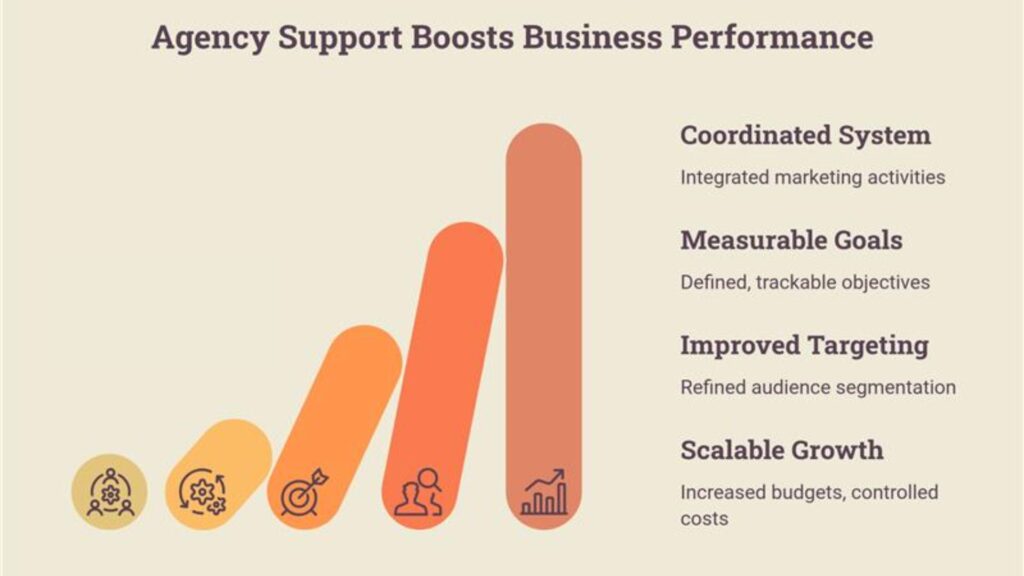
Performance Marketing Agency Boosts Business Performance

A business may need specialist support when marketing activity is increasing but leads and sales remain inconsistent. 

Common warning signs include rising advertising costs, poor-quality enquiries, incomplete tracking and reports that focus on clicks rather than revenue. Internal teams may also lack the time or expertise to manage paid advertising, analytics, landing pages and conversion optimisation together. 

A Performance Marketing Agency can help create a coordinated system across these areas. This may involve defining measurable goals, setting up conversion tracking, refining targeting, improving landing pages and reviewing lead quality with the sales team. 

Agency support can also be useful when a business is preparing to scale. Increasing budgets requires an understanding of which channels, audiences and offers can grow without causing acquisition costs to rise sharply. 

The right agency should be transparent about performance and connect its recommendations to qualified leads, customer acquisition and sales, not simply impressions or reach. 

Final Words 

When customer intent, targeting, advertising, landing pages, tracking and sales feedback work together, businesses gain a clearer understanding of where their customers come from and which marketing activities create value. 

This is particularly important for startups and growing businesses that need to control acquisition costs and scale with confidence. 

Need more qualified leads, not just more clicks? Contact Gateway Marketing Digital helps businesses and startups develop performance marketing strategies focused on better lead quality, measurable growth and increased sales. 

Read More
growth marketing services

How Growth Marketing Services Fix Failing Campaigns 

WordStream’s 2026 benchmark reviewed 13,474 US-based search advertising campaigns across 23 industries. It reported a median cost per click of $5.42, conversion rate of 8.18%, and cost per lead of $66.69. These are broad US benchmarks, not UAE-specific targets, but they show why clicks and low-cost leads cannot be treated as proof of profitable growth. 

Growth marketing services fix failing campaigns by locating bottlenecks across the customer journey, connecting campaign activity with CRM and sales outcomes, improving conversion paths, and testing changes against qualified leads, customers, retention, and revenue. The objective is not simply to generate more submissions. It is to improve the commercial value produced by the marketing system. 

A campaign may look efficient inside Google Ads, Meta Ads, or GA4 while losing prospects through weak landing pages, poor qualification, slow sales follow-up, or low retention. Campaign recovery therefore requires a full-funnel view. 

Key Highlights 

  • Campaign recovery begins with full-funnel diagnosis, not isolated channel changes. 
  • Clicks and leads must be evaluated against opportunities, customers, and revenue. 
  • The highest-impact bottleneck should be fixed before minor optimizations. 
  • Controlled experiments replace assumptions with measurable evidence. 
  • Scaling before fixing conversion problems can multiply wasted spend. 
  • Scaling before fixing conversion problems can multiply wasted spend. 

Signs of a Failing Marketing Campaign 

Campaign Performance Warning Signs 

Common warning signs include: 

  • Rising cost per lead 
  • Declining return on ad spend 
  • Poor lead quality 
  • Low lead-to-customer conversion rates 
  • High landing-page abandonment 
  • Traffic growth without corresponding revenue 
  • Low retention or repeat purchases 
  • Inconsistent performance across channels 
  • Dependence on one acquisition platform 

These metrics must be interpreted together. A higher cost per lead may be acceptable when sales conversion improves, while a lower cost per lead may be harmful when broader targeting attracts unsuitable enquiries. 

When the Campaign Is Not the Main Problem 

Poor results are not always caused by advertising settings. Weak demand, unsuitable pricing, unclear positioning, limited differentiation, or an unconvincing offer can reduce performance even when the campaign is technically sound. 

Campaign execution failure concerns audiences, keywords, creatives, bids, or placements. Funnel failure occurs when relevant prospects encounter weak pages, poor qualification, or slow follow-up. Product-market or offer failure means the proposition itself does not give the intended audience a strong reason to buy. 

The Limitations of Traditional Campaign Optimization 

Overreliance on Channel-Level Metrics 

Clicks, impressions, traffic, reach, and low-cost leads measure activity rather than growth. A campaign may reduce cost per lead by widening its targeting, yet most enquiries may lack the budget, location, urgency, or authority required by sales. The campaign looks efficient while cost per qualified opportunity worsens. 

Hidden Problems Across the Customer Journey 

Weak landing-page messaging, disconnected CRM data, inconsistent qualification, slow sales response, and ineffective nurturing can remain hidden behind good advertising metrics. Changing bids or creatives cannot repair a broken handoff between marketing and sales. 

The Risks of Scaling Too Early 

Increasing budgets before fixing targeting, conversion, and lead-management problems usually generates more of the same waste. Scaling should begin only after the business can show a repeatable link between spend, qualified opportunities, customers, and revenue. 

How Growth Marketing Services Diagnose Campaign Problems 

Acquisition and Campaign Audit 

The audit reviews Google Ads, Meta Ads, SEO, email, referrals, keywords, search terms, targeting, creatives, budgets, bidding strategies, placements, and conversion settings. Growth teams look for wasted spend, intent mismatch, audience overlap, creative fatigue, and inaccurate conversion signals. 

Broad search terms may generate submissions but few sales, while low-cost social lead forms may attract users with little purchase intent. The audit determines which channels and campaign elements contribute to qualified demand rather than surface-level activity. 

Landing-Page and Conversion Analysis 

Landing-page analysis compares the advertisement’s promise with the post-click experience. Teams review headlines, speed, mobile usability, structure, forms, calls to action, trust signals, and tracking. 

Irrelevant visitors may indicate poor targeting. Relevant visitors who engage but do not convert may indicate a weak offer, insufficient proof, unclear messaging, or unnecessary form friction. 

Customer Journey Mapping 

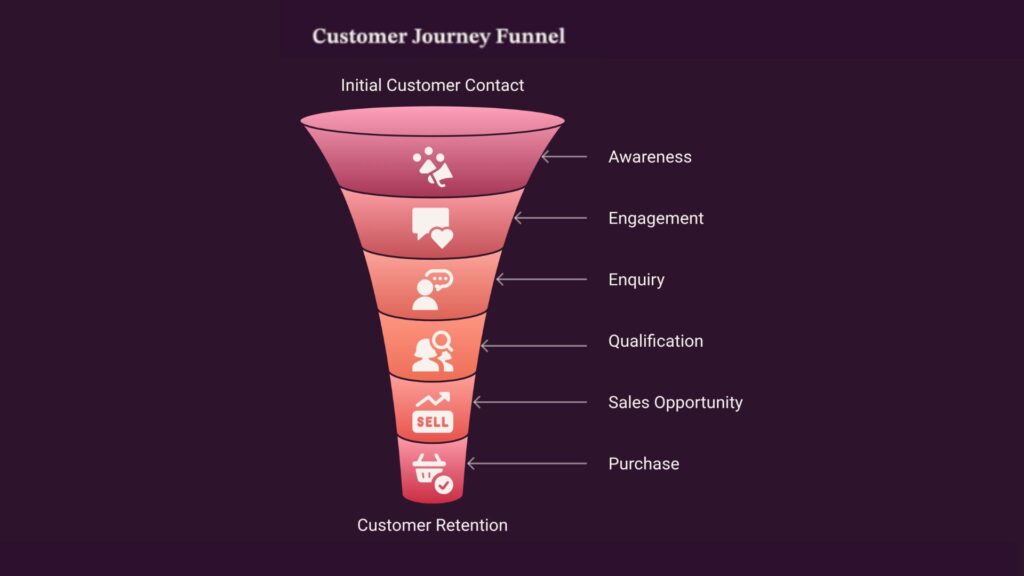
customer journey funnel

The customer journey can be mapped as: 

Awareness → Engagement → Enquiry → Qualification → Sales Opportunity → Purchase → Retention 

Relevant traffic may leave because the page is generic, qualified enquiries may stall because responses are slow, and customers may not return when onboarding or retention is weak. Mapping these transitions makes it easier to identify the stage that limits the wider campaign. 

CRM and Sales Data Integration 

Reliable diagnosis connects GA4, Google Ads, Meta Ads, form submissions, call tracking, lead scores, CRM stages, and closed revenue. GA4 provides attribution-path reporting, Google Ads supports importing offline conversions, and Meta supports CRM connections for qualified-lead optimization. s connection helps distinguish a basic form submission from a qualified lead, customer, or revenue event. It also prevents campaign platforms from treating every enquiry as equally valuable. 

Funnel Bottleneck Prioritization 

Problems should be ranked by expected impact, effort, confidence, revenue potential, and data requirements. An impact-confidence-effort model keeps prioritization practical. 

A broken conversion event usually matters more than a headline test because unreliable tracking affects every later decision. Similarly, slow sales response may deserve priority when landing-page conversion is already strong but qualified leads are not progressing. 

How Growth Marketing Services Fix Failing Campaigns 

Building a Full-Funnel Marketing Strategy 

A full-funnel marketing strategy connects paid media, SEO, content, email, remarketing, landing pages, sales follow-up, onboarding, retention, and referrals around measurable outcomes. 

If qualified leads are lost because sales replies take two days, faster CRM routing, response alerts, WhatsApp acknowledgement, and nurturing may improve results more than additional ad spend. Every stage must support the next rather than operate as an isolated activity. 

Improving Acquisition Through Performance Marketing 

Performance marketing services improve acquisition through search-intent alignment, audience segmentation, negative keywords, creative and offer testing, remarketing, accurate tracking, and CRM-based budget allocation. 

The cheapest click or lowest cost per lead is not always the best result. A higher-cost campaign may be more valuable when it produces stronger purchase intent, larger transactions, or greater customer lifetime value. WordStream’s 2026 analysis also notes that higher CPC can be worthwhile when traffic converts effectively.

Budget should therefore move toward campaigns that generate qualified opportunities and customers, even when their initial traffic costs are higher. 

Improving Landing-Page Performance Through CRO 

Conversion rate optimization is the structured process of improving the percentage and quality of visitors who complete a valuable action. 

Growth teams test headline clarity, message matching, page speed, calls to action, form length, trust signals, mobile usability, social proof, and offer clarity. GA4, heatmaps, session recordings, customer feedback, and A/B testing help identify friction. 

CRO should increase qualified conversions, not merely make forms easier to submit. Removing qualification questions may increase lead volume while reducing sales value. 

Strengthening Lead Generation and Qualification 

A stronger lead generation strategy connects targeting, offers, qualification questions, lead scoring, CRM routing, response time, nurturing, and sales feedback. Marketing and sales also need a shared definition of a qualified lead. 

A consultation, calculator, audit, assessment, or sector guide can create a clearer reason to respond than a generic “Contact Us” form. The offer must match the visitor’s intent and funnel stage. High-intent search visitors may be ready for a consultation, while early-stage audiences may need educational content before speaking with sales. 

Using Growth Experimentation to Improve Performance 

Growth experimentation follows a disciplined process: 

  1. Identify the highest-impact bottleneck. 
  1. Develop a measurable hypothesis. 
  1. Select one primary success metric. 
  1. Run a controlled test. 
  1. Analyze the result. 
  1. Document the learning. 
  1. Scale, revise, or stop the experiment. 

A team might test a consultation-focused page against a generic service page or compare a high-intent Google Search campaign with a broader Meta lead campaign. 

Results should be judged through qualified-lead rate, opportunity creation, customer acquisition cost, and revenue potential rather than lead volume alone. A test that produces fewer but better-qualified leads may be more valuable than one that produces many low-intent submissions. 

Adapting Growth Marketing Campaigns for the UAE Market 

Providers offering growth marketing services UAE businesses can use must account for regional audiences, languages, communication preferences, and industry-specific buying journeys. UAE localization involves campaign design, not simply adding “Dubai” or “UAE” to ad copy. 

Geographic and Audience Segmentation 

Dubai, Abu Dhabi, Sharjah, and other emirates can differ in customer concentration, competition, and service availability. Residents, expatriates, tourists, and international investors may also have different needs and decision timelines. 

Location-specific campaigns, budgets, landing pages, and offers can improve relevance and measurement. Nationwide targeting remains suitable when service coverage and conversion data support it. 

Language, Device and Communication Preferences 

Campaigns may require English and Arabic messaging, mobile-first pages, WhatsApp enquiries, click-to-call options, and fast acknowledgement. The appropriate mix depends on the intended customer segment rather than assumptions about all UAE users. 

Language should remain consistent from advertisement to landing page and sales follow-up. Mobile and WhatsApp workflows should also preserve lead qualification rather than treating every enquiry as equally valuable. 

Industry-Specific Campaign Requirements 

Real estate, healthcare, education, e-commerce, professional services, and business setup campaigns have different compliance needs, qualification criteria, sales cycles, and conversion paths. 

A property campaign may qualify prospects by budget, location, financing needs, and purchase timeline. An e-commerce campaign can optimize more directly toward purchases and repeat transactions. A healthcare campaign may require more careful messaging, trust signals, and appointment qualification. 

Targeting, offers, tracking, and follow-up should reflect the industry and intended audience. 

Metrics That Measure Campaign Recovery 

Funnel Stage  Key Metrics  What the Metrics Reveal 
Awareness  Impression share, reach  Whether the intended audience can see the campaign 
Engagement  Click-through rate, cost per click  Whether messaging attracts relevant attention 
Landing page  Conversion and form-completion rates  Whether the page supports visitor intent 
Lead generation  Cost per qualified lead  Whether acquisition produces suitable prospects 
Sales pipeline  Lead-to-opportunity and lead-to-customer rates  Whether leads progress commercially 
Acquisition  Customer acquisition cost  Total cost required to acquire a customer 
Revenue  Return on ad spend, marketing-sourced revenue  Whether marketing produces measurable income 
Retention  Retention and repeat purchase rates  Whether customers continue generating value 
Long-term value  Customer lifetime value  Expected value of the customer relationship 

Acquisition Metrics 

Impression share, click-through rate, cost per click, and cost per qualified lead help diagnose visibility and acquisition efficiency. They provide useful early indicators but do not confirm sales impact. 

Conversion and Sales Metrics 

Landing-page conversion rate, form-completion rate, lead-to-opportunity rate, lead-to-customer rate, and customer acquisition cost show whether traffic becomes commercially useful. 

These metrics help reveal whether the problem occurs before the form submission, during qualification, or within the sales process. 

Revenue and Retention Metrics 

Return on ad spend, marketing-sourced revenue, retention rate, repeat purchase rate, and customer lifetime value reveal whether growth continues after acquisition. 

Retention and customer value matter because a campaign with a higher acquisition cost may still be profitable when it attracts customers who purchase repeatedly or remain with the business for longer. 

Why Isolated Metrics Can Be Misleading 

Consider a hypothetical comparison. Campaign A produces cheaper leads, but few meet the sales criteria. Campaign B produces more expensive leads, yet a larger percentage becomes qualified opportunities and customers. 

Campaign A appears stronger in a basic advertising report. Campaign B may deliver higher revenue and a lower effective customer acquisition cost. The final decision should be based on commercial outcomes rather than lead cost alone. 

When Growth Marketing Support Is Needed 

Performance Warning Signs 

Rising acquisition costs, declining campaign performance, inconsistent lead quality, low landing-page conversion rates, difficulty scaling, platform dependence, repeated inconclusive tests, and traffic growth without revenue are common signals. 

Professional support becomes more valuable when paid media, landing pages, CRM processes, sales follow-up, and retention all require coordination. These issues are difficult to resolve when each team only reviews its own metrics. 

Tracking and Attribution Warning Signs 

Support may be needed when decision-makers cannot identify which campaigns generate qualified opportunities, where leads leave the funnel, whether sales follow-up affects results, or which audiences deserve more budget. 

GA4 attribution reporting and offline conversion imports can connect more of the customer journey when tracking is configured correctly. strongest signal is often a lack of visibility. Increasing budgets becomes difficult to justify when the business cannot connect campaign spending with opportunities, customers, and revenue. 

Conclusion 

Campaign recovery depends on solving the most important constraint first. That may be poor targeting, an unclear offer, inaccurate tracking, weak qualification, or slow sales response. Before increasing advertising budgets, businesses should audit the complete funnel. More traffic cannot repair a broken conversion or sales process. Sustainable improvement begins with measurable evidence and ends with qualified customers and revenue. 

If your business needs a structured approach to campaign recovery, Gateway Marketing Digital can help identify funnel gaps, improve campaign efficiency, and create a clearer path from marketing investment to measurable revenue through our revenue growth services. To discuss your business goals with our experts, contact us today and discover how data-driven strategies can accelerate your growth. 

Read More
meta ads for real estate in Dubai

How Meta Ads Help Real Estate Businesses Generate Quality Leads in Dubai 

Meta ads for real estate in Dubai bring quality leads when every project has its own landing page, enquiries can come in by WhatsApp as well as by form, and agents call back fast. That is how our Meta ads and WhatsApp campaign for Dubai Jewel Tower, a new residential tower in Al Barsha, generated 1,122 leads in about three months, with 145 of them reaching the viewing stage.

Facebook and Instagram give developers, brokers and property consultants a visual way to present projects and reach potential buyers. But strong results depend on more than launching an ad. Audience strategy, creative quality, lead qualification, landing pages, tracking and fast follow-up all matter. This guide explains how these parts work together to attract better enquiries.

What Results Can Meta Ads for Real Estate in Dubai Deliver?

These are real numbers from our own property campaigns in Dubai, published in full in our case studies:

  • 1,122 leads in about three months for the Dubai Jewel Tower launch, with 145 taken to the viewing stage (Dubai Jewel Tower case study).
  • Cost per lead down 41% in the first month of optimisation, from AED 176 to AED 103, while the qualified rate rose from 22.4% to 31.8%.
  • 44% of WhatsApp leads qualified, against 11% of Meta lead form leads, so budget moved towards WhatsApp.
  • Brokers made up nearly a quarter of all leads once we ran a separate broker channel next to the buyer ads.
  • 219 property viewings at a 17% lead-to-viewing rate on ready stock, and 33% on The Bay in Business Bay, from our earlier Meta and Google campaigns for Rocky Real Estate (brokerage case study).

Why Do Meta Ads Work for Dubai Real Estate Businesses?

Real estate is highly visual, which makes Facebook and Instagram useful for property marketing. Buyers can quickly see a project’s design, views, location, amenities, floor plans and lifestyle through images, videos, carousels, Reels and Stories.

Meta campaigns can support apartments, villas, off-plan developments, rentals, luxury homes and commercial projects. They can also reach people in Dubai and selected international markets.

Targeting should not be treated as perfectly accurate. Meta treats housing ads as a Special Ad Category in many markets, and some audience options may be limited depending on the market and campaign setup. Read Meta’s guide to choosing a Special Ad Category and check the options currently available in Ads Manager before building a campaign.

How Do Meta Ads Generate Real Estate Leads?

Meta Ads for real estate lead generation

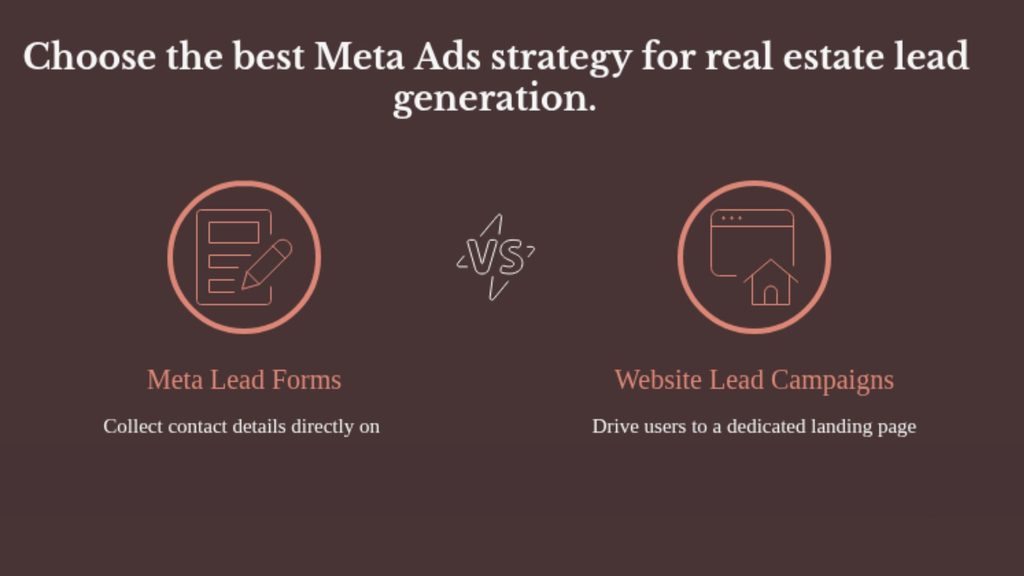
Meta Ads can generate enquiries in several ways. A campaign can collect contact details directly on Facebook or Instagram, send users to a dedicated property landing page, open a WhatsApp or Messenger conversation, or promote a specific development.

Strong campaigns usually match one clear offer with one clear next step. Someone seeing an off-plan project should quickly understand the location, property type, key benefit and what to do next.

Retargeting can also reconnect with people who showed interest but did not enquire the first time.

Meta Lead Forms

Meta lead forms let users submit information without leaving Facebook or Instagram. This can make it easier to request a brochure, availability details or a call from an advisor.

Forms should collect enough information to qualify the enquiry without becoming too long. Because they are so easy to fill in, they also attract more casual enquiries: on the Dubai Jewel Tower launch, lead form leads qualified at a quarter of the WhatsApp rate.

WhatsApp Conversations

Click-to-WhatsApp ads open a chat with the sales team. A buyer who starts a conversation is usually further along than one who taps a pre-filled form, which is why WhatsApp produced our highest qualified rate. It only works if every chat is answered quickly and logged against the ad that started it.

Website Lead Campaigns

A dedicated landing page is useful when buyers need more information before enquiring. It can show project details, images, location, amenities, floor plans, pricing and trust signals in one place.

How Do You Target the Right Real Estate Audience in Dubai?

Audience planning should start with the property, not with a long list of targeting settings.

Location Targeting

A Dubai-focused project may target people already in the UAE, while an investment campaign may also include selected markets such as the GCC, India or the UK.

The right locations depend on the property price, buyer profile, project type and sales strategy. A luxury investment project may need a different audience from a mid-market rental campaign.

Interest and Behaviour-Based Audiences

Signals related to property investment, luxury real estate, mortgages, relocation, investment or business may be useful where Meta makes them available. However, real estate advertisers should not assume every interest or behaviour can be used.

Housing advertising can have additional targeting restrictions, so available options should be checked inside the current campaign setup rather than copied from an old targeting list.

Custom and Lookalike Audiences

Website visitors, video viewers, existing leads, previous customers and people who engage with Facebook or Instagram can provide useful first-party signals.

Custom audience and lookalike availability may differ for housing campaigns, so advertisers should confirm what Meta currently allows for the relevant market.

Brokers as a Second Audience

For a new launch, brokers who bring their own buyers deserve their own ads, message and follow-up. On Dubai Jewel Tower, the broker channel brought in nearly a quarter of all leads, alongside the buyer campaigns.

Which Meta Ad Formats Work Best for Real Estate Marketing?

Meta ads formats for real estate marketing in Dubai

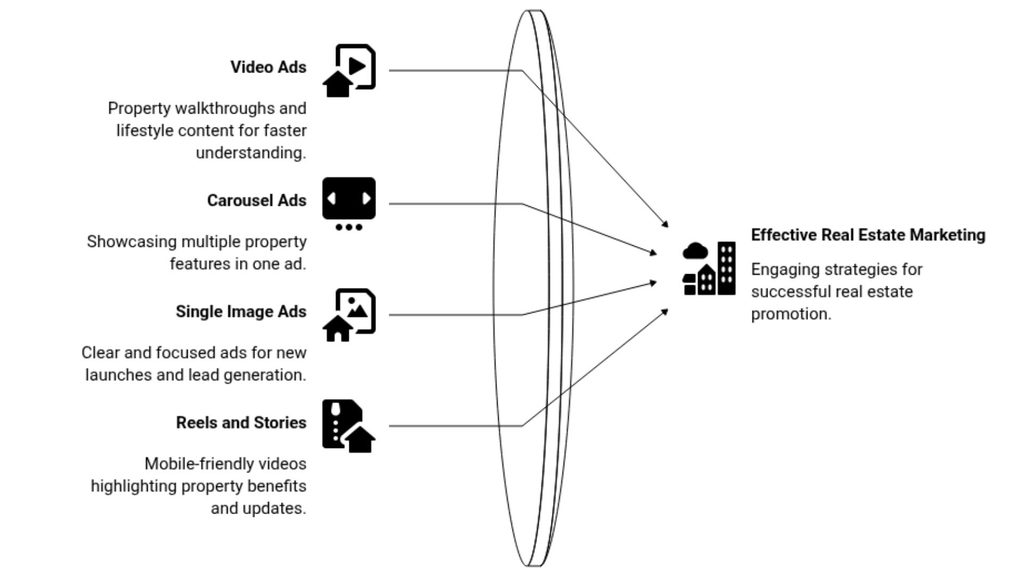
Video Ads

Video works well for property walkthroughs, project introductions, location highlights, construction updates and lifestyle content. It can help buyers understand a property faster than a long block of text.

Carousel Ads

Carousel ads can present several parts of one project. Each card can show a room, amenity, view, floor plan or unit type.

Single Image Ads

A strong single image works well for new launches, limited availability, open houses and simple lead generation campaigns. The message should stay clear and focused.

Reels and Stories

Reels and Stories are designed for mobile viewing. Short vertical videos can highlight a property feature, view, location benefit or project update.

What Makes a Real Estate Meta Ad Generate Better Leads?

A good property ad answers the questions a serious buyer is likely to have. It should clearly show what is being offered, where the property is located, what type of unit is available and why the person should take the next step.

Strong ads often include quality images or videos, a clear location, property type, unit size, major amenities and starting price where appropriate. The opening line should attract attention without making unrealistic claims.

The call to action should match the buyer’s stage. Useful options include “Book a Viewing”, “Request Property Details”, “Download the Brochure”, “Check Available Units” or “Speak with a Property Advisor”.

The experience after the click must also match the promise made in the ad.

How Can You Improve the Quality of Real Estate Leads?

Lead volume alone does not show whether a campaign is successful. A low-cost lead has little value if the person has the wrong budget, wants a different property type or has no realistic buying plan.

Businesses using Meta ads for real estate in Dubai should include simple qualification steps. A form can ask about budget range, preferred property type, buying timeline and whether the person is an investor or an end user. For premium projects, our guide to high-ticket lead generation in the UAE covers how to reach and qualify high-net-worth buyers.

Ad copy can also help filter enquiries by stating the location, starting price, unit type, payment plan or expected completion date where relevant.

Qualified leads should move quickly into a CRM or sales process. The sales team should know which campaign and project generated the enquiry and follow up while the buyer still remembers the property. On our brokerage campaigns, the sales team contacted 75% of ready-property leads, and moving budget to the projects that booked the most viewings is what lifted The Bay to a 33% lead-to-viewing rate.

How Does Retargeting Reach Interested Property Buyers Again?

Property decisions are rarely instant. A buyer may view several projects, compare prices, discuss financing or wait before contacting an agent.

Retargeting helps a business reconnect with people who already showed interest. This may include users who visited a property page, watched a video, engaged with Facebook or Instagram, clicked an ad, opened a form without submitting it or visited the website without enquiring.

The follow-up ad should add value rather than repeat the first message. It could highlight floor plans, availability, payment options, project progress or a new property video.

Why Do Your Landing Page and Tracking Matter?

Paid advertising cannot fix a weak website experience. A landing page should load quickly on mobile, explain the property clearly and make it easy to enquire.

Useful elements include project images, property details, location, amenities, pricing where appropriate, a short form, phone or WhatsApp options, and trust signals such as developer or project information.

Tracking is equally important. Meta Pixel records website actions from the browser, while Conversions API can send selected event data from a server or connected source. GA4 helps measure website behaviour, CRM tracking connects leads with later sales activity, and UTM parameters help identify which campaign generated a visit.

These tools make it easier to judge lead quality instead of relying only on ad platform numbers.

What Are the Common Meta Ads Mistakes in Real Estate?

One common mistake is building a campaign around broad assumptions instead of a clear buyer and property offer. Another is using the same creative for too long, even when people stop responding.

Businesses also waste budget when they send every ad to the homepage instead of a relevant project page. Weak mobile pages, unclear forms and slow loading can reduce enquiries after a user has clicked.

Focusing only on cheap cost per lead is another problem. A campaign with fewer qualified enquiries can be more valuable than one producing many low-intent leads.

Other common issues include poor qualification, slow sales follow-up, no retargeting, weak conversion tracking, and forms that ask for too little or too much information.

Which Metrics Should Real Estate Businesses Track?

Cost per lead is useful, but it should not be the only metric.

Businesses should also track qualified lead rate, cost per qualified lead, landing page conversion rate, viewing or appointment booking rate, sales conversion rate, and return on ad spend when revenue can be measured accurately.

For example, one campaign may generate cheaper leads, while another produces more viewings and buyers. The second campaign may therefore be more valuable.

Clicks, impressions and raw lead numbers show activity. On their own, they do not show whether advertising is creating useful sales opportunities.

FAQ: Meta Ads for Real Estate in Dubai

Do Meta ads work for real estate in Dubai?

Yes, when each project has its own landing page, enquiries can come in by WhatsApp as well as by form, and agents follow up fast. Our Meta ads and WhatsApp campaign for Dubai Jewel Tower generated 1,122 leads in about three months, and 145 of them reached the viewing stage.

What is a good cost per lead for real estate Meta ads in Dubai?

Judge cost per qualified lead and viewings, not raw cost per lead. In its second phase, the Dubai Jewel Tower campaign ran at about AED 53 per lead against an approved target of AED 280. Across prime launches in our brokerage campaigns, leads came in at AED 148.90 each.

Are WhatsApp leads better than Meta lead form leads for property?

In our Dubai Jewel Tower launch, yes: 44% of WhatsApp leads qualified, against 11% of Meta lead form leads. Lead forms are cheap because they are easy to fill in, while a WhatsApp conversation filters for buyers who actually want to talk.

Are there targeting limits on real estate ads on Meta?

Meta treats housing ads as a Special Ad Category in many markets, which can limit audience options such as age, gender, postcode and some interests. Check what Ads Manager allows for your market before you plan the audience, and lean on creative, landing pages and qualification to find the right buyers.

Can Meta Ads Help Real Estate Businesses Get Better Leads?

Meta ads can support real estate lead generation when the campaign is built around the full buyer journey. Audience setup matters, but so do the property offer, creative, landing page, qualification process, tracking, retargeting and speed of follow-up.

A well-planned strategy for Meta ads for real estate in Dubai should focus on finding better sales opportunities, not simply collecting more form submissions.

If you are looking for a Meta ads agency in Dubai to plan, run or fix your property campaigns, speak with Gateway Marketing Digital about a strategy built around your projects, buyers and sales targets.

Read More

Certified partners